Friday, March 1, 2019

12 Years

This is going to be rambling and I am going to mix a few metaphors, bear with me. 

A river is the common metaphor for time. Time only flows forward, never backwards. Time moves constantly and takes anything along for the ride. The question then is are we moving through time or are we the agents of movement? Do we move time forward by our decisions or is time just rapidly moving ever forward, sweeping us in it? People have been going to rivers for peace and quiet, for meditation and contemplation, as long as there have been people or rivers. I think it's because we recognize the power of something outside of ourselves. It takes years of schooling and millions of dollars of technology and teams of engineers to stop what a river does just by being a river. Rivers don't have engineers telling them where to go, how fast to flow, and what to flood. Rivers are just natural occurrences--reminders of the power of the natural world and its general apathy toward human desires. 
I think we don't move time forward as much as get caught up in the stream. Well, I think that most of the time. Sometimes I lean more towards the side of my decisions are important enough to move time itself forward. But then I remember the time the river took a turn.
Twelve years ago the planet changed as far as I am concerned. On 2/27/07, my dad died. This was a catastrophe. Nothing happened in the years prior to prepare me for life without him. Nothing has happened since to make me miss him less. To be honest, nothing has happened to make any of this make any sense or make it any easier. If anyone were to tell you that grief is best aided by time, that person is a liar. 

Sure, I'm not crippled by grief after 12 years, but it still grabs me. 

You know how you might drive past a town with a paper mill or some kind of factory and it just smells horrible? You might wonder how anyone could ever get used to living with that terrible smell. You might think you would always be miserable living in a town with an odor. The truth is, you'd get used to it. Food would taste normal again after a while, and you'd be able to ignore the smell in the bleachers while watching a baseball game with your friends. Then, maybe you'd go on a long vacation and you'd return to rediscover how your town smells. Grief is living in a town that smells like rotting garbage all the time. Eventually you get used to it, but that doesn't make it go away, and it doesn't mean you forget it. Something happens and not only are you reminded of grief, but it feels like the day it happened all over again and you have to get used to it all over again. 

God is different these past 12 years. Not in a way that challenges Immutability. I'm not a heretic. God isn't changing, but my experience of God is changing. The best way to put it is my God is getting bigger and bigger by the year. The tiny God of 12 years ago wouldn't be able to handle where I've been or what I've learned about the world since then. God on 2/26/07 fit really well into my pocket and was there when I needed to pull handkerchief-God out and wipe away a quick tear. Then the river of time took the big turn on 2/27 and pocket sized God got really big really fast. 

God was bigger than my religion or my Christianity or my church. God was bigger than my grief and my pain. God is bigger now to me than He's ever been. There's a line from my favorite songwriter Aaron Weiss I repeat to myself quite a bit. "Blind as I'd become, I used to wonder where you are, these days I can't find where you're not" It's a bit of a mantra to me.

If God is in the pain, then where isn't He? If God is in the midst of death and grief and sadness, then why limit Him? 

The past twelve years have been an exercise in me learning to not be surprised by God anymore. I know God loves me. I know God is FOR me, and WITH me. I know these things. Even when I rediscover how bad the town of grief smells, I remember those things. Even when I am depressed, and unmotivated, and beaten down by life. I can either choose to react positively or negatively to every situation the river puts in front of me, and no matter which one I choose God will still be for me and with me. The town doesn't stop stinking, though. 

Wednesday, November 22, 2017

How to Keep the Gods Happy

If you lived in the Middle East five thousand years ago, you would notice there were a few things everyone seemed to know. In those days, everyone knew there were lots of gods who existed outside of human control. These gods were responsible for all the things we couldn't do on our own: for the rain, for the sun, for the crops, for the hunt, for the fermentation of beer, and for fertility. We couldn't control the gods, but we needed them to like us. The only way we knew to keep the gods on our side is to give them something we liked. Need the gods to like you a lot? Give them something you like a lot. Did you make the gods really mad somehow? Give them something you like the most. The system of sacrifice pre-dates the Bible, it is older than the book of Leviticus, and it is as old as human consciousness.

We know we don't control everything, and we need to keep those who do on our side. 

A few years ago I was in Jordan with some of my students. We were walking down a very old-but-modern street in Amman. Next to the shisha bars and kebab restaurants there was a very new looking burger restaurant. We were all in a group across the street from it, walking calmly down the road that evening when a pickup truck screeched to a halt in front of the burger joint. Two men jumped out of the cab of the truck and pulled a very uncomfortable and loud sheep from the back. We froze. The men drug the sheep bleating to the curb and a third man came running from inside the restaurant with a large knife. This man slit the throat of the squealing sheep and let its blood fill the street. My group of American students were horrified. Some began crying, a few gagged. The sheep breathed its last breath as deep red blood squirted from its neck.

What? 

Why did that sheep get killed right in front of me on a normal night in 2014?

I looked at the lady who was taking us to dinner. She could see the questions I had before I could get them out.
"He must have made an oath to God," she said. "That is probably his restaurant and he made a promise to kill a lamb if it was allowed to open. Don't worry, the meat will be given to the poor."

"What century is this," I thought. "How barbaic, how archaic, how backwards."

We modern people would never do something so silly. We would never worry about making God angry with us. We would never sacrifice something in order to keep beings we can't control to like us. We would never change how we act in order to be accepted by outside forces. We would never spend more money to be accepted. We would never try to keep up with our neighbors just to impress them. We would never think if we just did this, had that, dated her, looked like him, or bought those then the people from whom we crave acceptance would really like us.

"Everybody worships."  David Foster Wallace was right. We can't help it. We are limited creatures who are all painfully aware of our limitations and that we need outside help to be happy and alive. We have to keep the gods happy. We have always known that and we have organized systematic mechanisms in order to assure us the gods are happy with us. 

Here's the amazing thing about Jesus. God is exactly like Jesus, and God can't change so God has always been exactly like Jesus. God is exactly like Jesus and God has always been exactly like Jesus. Make sure you understand what that means. For centuries and centuries humans tried to figure out where we stood with the gods. The Israelites developed an intricate system of sacrifice to make sure they stayed on God's good side. To them, God needed the sacrifice of bulls and goats in order to even be in their presence. In order to even be able to talk to God, something else needed to die. Except over and over and over we see glimpses in the Hebrew Bible (Old Testament) that God didn't want those sacrifices in the first place. In Psalm 51:16-17 King David understands that God isn't pleased with burnt offerings and sacrifice. In 1 Samuel, in Hosea, in Jeremiah, in Isaiah,  and most persuasively in Amos we see God speaking through prophets--the men who were supposed to know most what God wanted and what He was like. In every case, we see them telling the people that God doesn't want these sacrifices. The sacrifices aren't keeping them in good standing with God because God never wanted them in the first place. The sacrifices were something they were already doing because that's what they assumed the gods wanted, and God allowed this to be part of the system through which they came to worship Him. The sacrifices were for our hearts, for our own peace of mind.

In Jesus, we see God fully revealing Himself to us. He shows us exactly what He has been like all along.  God doesn't need the blood of bulls and goats. God wants our hearts to be pure and our actions to be good. We don't have to worry about making Him mad. We don't have to work and work in order to please Him. We don't have to compete with our neighbor in order to be the best. We don't have to compete for blessings from a capricious father who gives good to some and garbage to others. God loves us and gives us only good and perfect gifts.

The cross is the sacrifice to end all sacrifice. NOT BECAUSE GOD NEEDED IT, BUT BECAUSE WE NEEDED IT. Notice that was in italics, underlined, all caps, and bold. We needed the sign of who God is, what God looks like, and what God is willing to do while forgiving our sin. We needed it to have our heads cleared from the lies of the devil and our own insecurities. The Cross is the sign stamped on our hearts that we are good with God. He doesn't need a single thing from us. He doesn't need us to try harder, buy more, dress trendier, or look better. He is happy with us. We don't keep Him happy, because God doesn't change.

How jealous are we of other people who we think are getting blessed when we aren't? Why doesn't God like us as much as He likes them? Judgement, division, jealousy are all based in the same insecurity. When we are secure in how much we are loved, there will be no jealousy, no competition, and no judgement. You are blessed. That's a description of your identity, not your current situation.

May He continue to illuminate the cross in our hearts, and may we be reminded of how right we are with God. May we kill our idols. May Jesus' sacrificial love keep us from sacrificing anything to anyone else. 

Friday, November 10, 2017

From Anger to Action

Toddlers are a glimpse into our own unfiltered behavior. They haven't learned how to behave and hide their true feelings from society, so they act the way they feel like acting. When a toddler loses his kite in the wind and sees it sail into a tree, he loses his mind. He falls on the ground, kicking and screaming, he wails at the sky as if the gods have conspired to torment him, he pays no attention to his own ability to walk over to the dangling string and regain control of the kite. When a toddler is over-tired, the smallest thing can set him off into a rage nightmare. His guards are down and the injustice he feels over bedtimes or candy are coming pouring from a volcano of raw emotion. But he doesn't actually do anything to make himself more likely to get what he wants.

There is a lot to be angry about these days. If you watch the news, or read twitter for three seconds, you can work yourself up into a frothing mess. It is inescapable how many wrongs need to be righted and how many systems need to be totally destroyed and rebuilt. It is infuriating how hypocritical those on the "religious right" can be, and how blind they are to it. If I allow myself to think about it for too long, I become a furious mess. But I don't actually do anything about it.

I watched a sermon on YouTube by a pastor out of New York named Carl Lentz in which he talked about how too many people are "angryvists" and not many are activists. That struck me. How many times am I angry, righteously angry, but content to do absolutely nothing? As if being angry about the state of the world is somehow going to do something. Anger is a largely useless emotion. It is a primitive reaction in the most ancient parts of our brains to stimuli we find at odds with our desired method of survival. We get most angry when we are most stressed. Like a toddler who is over-tired, we are more prone to erupt when we feel distressed. When we are overcome with anxiety, we aren't ourselves. Anxiety causes stress, and stress makes us more irritable. When we are irritable, a tweet from a politician we don't like can set us ablaze. When we are stressed, we can watch a report about racial injustice and spew venom for twenty minutes about how miserable the hearts of the people in power must be to allow this to go unchecked, then we sit back down and check out another show on Netflix. We don't do anything about it.

What's at the core of your stress? What is causing you to be irritable? It's more important to know why you are irritable than it is to know what is irritating you. If you give an over-tired three year old what he is yelling about, he will only get irritated about something else. Even if the problem that you think is so irritating gets solved, you will only get irritated about something else.

One of the most common sources of anxiety is fear of the unknown. It's why half of the scary movies in the world take place under water or in space. We don't know much about sharks, so they terrify us. We don't know what we would do if aliens were real, so we freak out at alien movies. If we are truly honest, we don't know a whole lot. When we lie in our beds alone with our thoughts and the darkness and the uncaring ceiling, we really feel like we might be wrong about everything we think we know. The entire field of epistemology exists precisely to show us exactly how little we can be sure we actually know. Our ignorance of the future, of what is going to happen tomorrow, of whether it's all going to be ok--these are the sources of our anxiety.

The opposite of anxiety is confidence. Confidence is attractive because we want to be associated with someone who isn't as anxious and insecure as we are. Confidence leads to action while anxiety leads to stress. When you can manage your stress enough to funnel your disgust about the state of the world into action to end the injustice you see, you are operating from a confidence in something outside of yourself. We can't be confident in and of ourselves. We need something to be confident in so we can act.

One of the most famous activists--a man whose anger was proved righteous in his action--was Martin Luther King, Jr. He didn't just talk about injustice, he didn't yell and scream about hypocrites, and he didn't just send tweets with a hashtag that aligned him with the "good guys." He went out and did something. He stood on the steps of the Alabama State Capital building on March 25, 1965, and delivered a speech entitled Our God is Marching On. You should read it. He ended the speech with the key to his confidence. Dr. King gives us and his listeners that day a glimpse at how he overcame anxiety based in ignorance about the future and leapt into activism driven by confidence. He asks over and over "How long?" and answers it "Not long!" followed by a reason he is confident his cause will be victorious. He was confident in his belief that "no lie can live forever," and that "the moral arc of the universe is long, but  it bends towards justice." Dr. King believed those statements enough, he could be confident and funnel his emotion into action.

We can be confident in the same things. We can be confident God is ahead of us, drawing us and the world forward. God is for our progress as we move the world towards justice. We can't sit and be anxious, shouting and making more enemies that friends. We have to base our knowledge on the belief our God is marching us toward justice, and then act accordingly. We won't ever fully know anything. In his letter to a group of Jesus followers in the ancient city of Corinth, the apostle Paul--at the end of a brilliant rant about the power of Love--reminds us we only see a dim reflection of reality, but one day we will see face-to-face. We will know in the way in which we are fully known. Your fear about the future is a sign of your lack of confidence if how fully you are known. My angry tweets I thankfully delete more than I send are a sign of my lack of confidence. My rants about the hypocrites in politics are exercises in insecurity.

When he asks "How long will Justice be crucified and Truth bear it?" Dr. King confidently answers, "not long." Let's move beyond anger and into action. Let's move beyond ignorance and into confidence. Let's manage our stress, speak truth into our anxiety, and share the confidence we have with Love. Because Love is the anchor, the bedrock, the foundation. Love is the thing behind the thing behind the thing. Love is the motivator and the engine of all things. Love is creating and building and moving us all towards the Lover of our souls. 

Wednesday, November 1, 2017

Fuel

When I moved to Germany I brought a coffee grinder in my carry-on. It was precious to me. It's cliché now to talk about how much you need coffee on the internet, but I don't need coffee as much as I am sustained by it. I don't like it in the way a car doesn't like gasoline, it requires it. This coffee grinder was expensive, it was large, it had a serious sounding name like BistroPro3000 or something, and it was 'randomly' checked at every security checkpoint between Dallas and Düsseldorf.
My first day in my German apartment, I woke up and plugged my coffee grinder in. Sparks. Smoke. The unmistakable smell of a small electrical fire. I unplugged it and looked at it, trying to ascertain the cause of the issue. I looked at my power adapter, it seemed to be working. Like an idiot, I plugged the coffee grinder back in and tried again. Sparks. Smoke. The unmistakable smell of a small electrical fire. And then nothing.
I later found out that it didn't matter which converter or adapter I used, any electrical engine is set to run at a certain speed and voltage, and there is no way to run an American grinder on European electricity. My grinder was trashed and I didn't even get coffee that day.
When you rent a diesel car, the rental car company will usually put THIS IS A DIESEL stickers in at least three places for the driver to see. Filling a diesel engine with gasoline is a quick way to test how 'complete' the complete coverage insurance is. That isn't to say gasoline is bad for all cars. No one would say that,  because it wouldn't make any sense. We know gas is good for some and diesel for others. We know coffee grinders with plugs made for the USA are good there, and grinders with EU plugs are good in the EU. We don't need to try to force one to work on the other's electrical current. We don't get mad at the car for breaking if the driver puts the wrong fuel inside.
Why do we do that for ourselves?
If we see something working for someone else, do we immediately assume it will work for us? Aren't people more varied than cars?
We each have a soul to feed. What feeds our soul is different for each of us. The good news is we all know what feeds our soul, even if we try to deny it.
You know what feeds your soul.
You're feeding your soul when you do something and it immediately puts you at ease, makes you feel fulfilled, and allows you to be present in that moment. You feel like yourself. You feel connection to God, to the world, and to the people you love. For some it might be writing, it might be composing music, it might be going to concerts or painting. It might be sharing a meal or a cup of coffee with people we love. We are all so different and no one can tell you what feeds your soul.
You know that thing you do and when you finish you think "I should really do this more often?" That thing is feeding your soul. Things that feed your soul feel as good when they are over as when you are doing them. 
Take some time to reflect on what feeds your soul. Don't worry about what someone else is doing to feed theirs, only focus on what fuels you. Your engine--your soul--needs to be fueled with specific fuel and today is a good day to find out what you run on. 

Monday, August 22, 2016

Two Churches and a Boat

A few days ago I was in Brussels, Belgium, being a tourist. It was a California-swimming-pool-blue sky day and I walked the city with my wife and her mother. We stopped in cafés and shops and museums and experienced the city as much as one can in two days.

We walked to a cathedral at the top of a hill, a massive building with twin column towers reaching to the sky. Flags lazily flapped in the breeze at the cathedrals highest point. I was sure the inside of this building would be as impressive as the outside. Having seen the cathedral in Cologne several times, I was anticipating a similar feeling of dumbfoundness when I walked inside the sanctuary.
I was disappointed when we couldn't find a single door that would open. We walked all the way around it. I tugged on a door with St. Peter carefully engraved on it, nothing. St George's door? Nope.

I was upset. And not just because St. George gets to be a Saint because he killed a dragon when we know there aren't such things as dragons. I was upset because I hate the idea of locked doors on churches. The only thing I hate more than locked churches are churches that charge admission, looking at you St. Mark's in Venice.

Later that evening we walked after dinner. I love to walk after dinner. It makes me feel like Woody Allen, but not like weirdo-maybe-pervert Woody Allen, but like cool-artist Woody Allen. Really more like a character in a Woody Allen movie. I love having a delicious meal with people I like and then walking with them, talking mostly about how good the meal was. It's one of the few distinctly urban experiences I enjoy. So we walked. We meandered through the skinny streets of the old town and then came upon a small square with cafés and bars (Brussels ain't running out of cafés or bars anytime soon) and there was a church in the middle of the square.

This church was old, sure, but not special. The outside of it looked like any number of churches in Europe. It could have been a small Catholic church in about 20 countries. Its door, however, was open. We walked up to it and were shocked. The inside was jammed with stuff. Just tons of things. This tiny church had paintings in gold frames all over the walls, a crucifix ten feet tall hanging in the entryway, and not one empty space. Individually, each piece of art was beautiful. Piled together with ninety other things and a giant shrine holding the bones of thirty or so martyrs, it just looked busy. We took off, overwhelmed.

Sometimes we can be closed off. Maybe full of truth and beauty, but unavailable to anyone. We have a lot of good ideas about God but don't ever share them. Or maybe we like our people, but don't want to be open to those people, whoever they are. We can be closed up cathedrals.

We can also be so full of stuff. We can let people in, only to show them everything we have immediately, scaring them off. We can be "vulnerable" but really all we mean is we are OK sharing a ton in small group or praying out loud. We over-share in an attempt to be more pious or to cover up what is really wrong. We pile religious things up in our lives, like they will help us.

I saw a refugee boat in the entryway of the Cologne cathedral a week ago. It was an actual boat, about 6 yards long, that had held 100 refugees on their quest for a new life. Many of those people had died on the journey, suffocated to death by the bodies of other refugees. Scared people looking for hope. Projected on the floor in front of the boat, it said "Christ sits in the refugee boat." Nothing in any church has moved me as swiftly and deeply as that image. I needed a moment. An empty boat tells a story of hope and loss and suffering and need. It asks for compassion and understanding and Love. Christ is there in it and in me. He is in the boat, and He is in me, so maybe I can see myself in the boat.

Not a closed cathedral, not a church full of religious trinkets, but a refugee boat might be the best image of Christ's love inspiring us to participate in His work. Let it be so.

Monday, July 11, 2016

We're All Guilty, We're All Crazy, We're All Wrong, We're Alright.


The world is on fire. Maybe not on the surface, and it may not be visible all the time, but there is a spinning and burning tornado of flame under the surface and anything that gets close to it has a chance of burning. The smallest step, the slightest wrong, the wrong turn of phrase will ignite and burn up as the world's furnace gets hotter and hotter. We have done this to ourselves, as we are seemingly unable to coexist with other human beings who look, believe, act, or feel differently than we do. It's a shame.

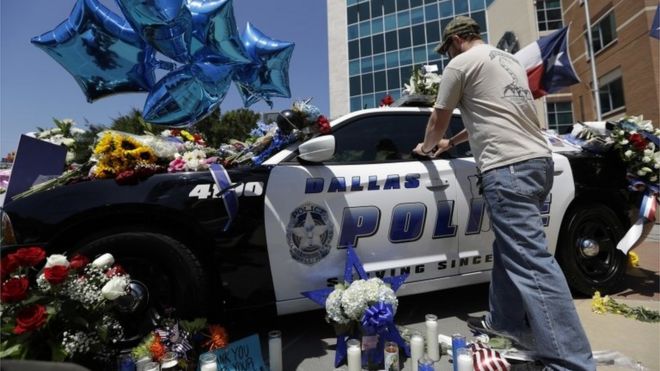
A few days ago a black man was killed by a police officer in Minnesota. His name was Philando Castile and he was shot when a policeman overreacted to his possession of a firearm at a routine traffic stop. In America, his possession of a firearm was completely legal and within his rights. The police officer made a terrible mistake, or was a terrible person. In a world on fire, you don't get to make mistakes. Especially the kind that cost someone his life.

Conclusions were jumped to, lines were drawn, sides were taken, photos were found to prove Castile was this or that type of person--as if any type of person deserves to be shot at point-blank range in front of his girlfriend.

The very next day a peaceful protest of the police killings of black men in America was taking place in Dallas, one of my home towns. The world is on fire, and peaceful protests rarely stay that way when they get too close to the flames. A madman opened fire into the crowd, targeting police officers as some sort of retribution for the killings of black men in America.

There's a myth called Redemptive Violence. It is as old as humanity and is deeply rooted in even the earliest stories we told ourselves around ancient campfires. If there is chaos or suffering, then violence can solve the problem. The hero can knock enough heads in to free the princess or the bad guys will always be beaten by the good guy whose guns are super cool. We even name our missiles Peacemakers. We truly believe, down to our core, that violence can bring about peace and justice. We believe that fire can be fought with fire.

Any progress made at the peaceful protest--any brotherhood or forgiveness made possible by the selfies with cops and handholding street songs sung by the protesters was eliminated faster than a speeding bullet. The protest was hiding the fire, but fire burns everything eventually.

Empathy is impossible when we're yelling. When the fire is burning, we can't see the Other for who he or she is. We can't see that even when we are not at fault directly, we are at fault. Life is not black and white, Us and Them, because the world isn't that way. Living dualistically will only lead you to become more judgmental, more angry, and more convinced you are right and those people are wrong.

In the book of John, Jesus in confronted by some people who are convinced they are right. They have caught a woman in adultery (it isn't clear what happened to the man she was caught with, but it's likely not much because life stunk for women back then) and have the right to execute her. She was wrong. She made a mistake. The world was on fire and she got too close. These men were going to show her and everyone else what happens when you aren't right enough.

Jesus starts writing in the dirt.

Some say he was writing scriptures, or listing the sins of the accusers, some say he was writing the names of the women they committed adultery with. No matter what he wrote, his next statement is enough to instantly extinguish the fire. "Let anyone who is without sin be the first to cast a stone at her." Immediately he injected empathy into the situation. He allowed the men to see themselves and their sin in her. They were the woman caught in adultery and they couldn't condemn themselves to death.

What empathy does is it allows you to understand how infinitely capable you are of wrong. You can hate with the best of them. A few decisions separate you from the worst person in prison. The difference between having an impulse and acting on it is the difference between many of us and many of the people behind bars today. Understanding and embracing that is how empathy can begin working itself into the system of the world, putting out the fires.

Empathy only happens effectively when we listen to stories different from our own. When we understand people aren't making up their shared experiences. There is a problem in race-relations in the United States. There is a problem in policing in the United States. There is a problem with Hate in the United States. There is a we and them problem and we see how connected we are to them, and how connected our happiness is to theirs, we will begin to see the flames die down around us.

I am Philando Castile, and I am the cop who killed him. I am the cops shot in Dallas, and I am the murderer who killed them. We are connected because we are all human. Empathy has to rule the day, or we will all be burned up in the fire. We are all guilty and we are all crazy and we are all wrong and, because of the merciful Love at the center of all things, we are alright. 

Tuesday, May 17, 2016

Daily Devotional: May 17


The Gospel According to Mark, Chapter 10

Perhaps the greatest sermon ever preached on Mark Chapter 10 was given by Dr. Martin Luther King, Jr. on February 4, 1968. This sermon, "The Drum Major Instinct," (please listen to it here) masterfully expounds on not only Mark 10, but also a unique darkness that exists in each and every one of us.

James and John are walking with Jesus as they did almost every day during His ministry on earth. I've done a few group hikes in my life, and funny conversations and arguments can help pass the time on tedious parts of the trail. Jesus and his posse walked everywhere. I can imagine how boring it would be to be walking for hours a day, and can imagine how my mind would cook up bizarre theories and ideas as it looked for ways to keep itself occupied. James and John are walking with Jesus, and they ask Him an innocent enough question:

"Hey, when this is all done, can we sit on either side of your throne in Heaven?"

Dr. King's sermon identifies the single driving force behind human activity is the Drum Major Instinct. This instinct, this desire to be recognized, is the gas in our engines. We want people to think we are important, we want people to desire us, we want people to listen to us. Dr. King points out that our very first cries as infants were cries for attention and affection, and it never stops as old as we get. James and John were acting out of their Drum Major Instinct because all of us do. All of us want to be the greatest. 

Jesus in one of the few instances where He gives specific instructions for living, tells His followers exactly what is needed to be first among them. Be last. If you want to be great you must be a servant to all.  Using Himself as an example, as we all should, Jesus says He did not come into the world to be served, but to serve. 

I'm not a nice person when I get stressed, cold, or hungry (or am in an airport). I become even more selfish and needy than I usually am. My selfishness is born out of my Drum Major Instinct to be served. I deserve speedy service and good food. I deserve recognition for the good things I do. 

Our desire to be recognized, to be in the lead of the parade, isn't inherently evil. It is easily corrupted by our hearts, but is also something we can use for good. We can be drum majors for Love. We canbe drum majors for Hope. We can lead by serving. At the end of the sermon, Dr. King gives his hopes for what people would say about him when he dies. 
"I'd like somebody to mention that day that Martin Luther King, Jr., tried to give his life serving others.
I'd like for somebody to say that day that Martin Luther King, Jr., tried to love somebody.
I want you to say that day that I tried to be right on the war question.
I want you to be able to say that day that I did try to feed the hungry.
And I want you to be able to say that day that I did try in my life to clothe those who were naked.
I want you to say on that day that I did try in my life to visit those who were in prison.
I want you to say that I tried to love and serve humanity.
Yes, if you want to say that I was a drum major, say that I was a drum major for justice. Say that I was a drum major for peace.  I was a drum major for righteousness. And all of the other shallow things will not matter.  I won't have any money to leave behind. I won't have the fine and luxurious things of life to leave behind. But I just want to leave a committed life behind. And that's all I want to say.
If I can help somebody as I pass along,
If I can cheer somebody with a word or song,
If I can show somebody he's traveling wrong,
Then my living will not be in vain.
If I can do my duty as a Christian ought,
If I can bring salvation to a world once wrought,
If I can spread the message as the master taught,
Then my living will not be in vain.
Yes, Jesus, I want to be on your right or your left side,  not for any selfish reason. I want to be on your right or your left side, not in terms of some political kingdom or ambition. But I just want to be there in love and in justice and in truth and in commitment to others, so that we can make of this old world a new world."
Amen. 


Tuesday, May 3, 2016

Flour & Yeast & Salt & Water & Grace & Peace


There's cheese and then there's cheese. The former comes in a resealable bag and the latter usually has a funny french name and funnier smell. The earliest records of cheese being made by our ancestors is from 8000 years before Jesus would have been dipping bread into oil and fresh goat-cheese.

There's bread and then there's bread. The former comes from a plastic bag with a twist-tie and the latter comes from an oven. The former has tons of funny sounding ingredients, the latter usually has about four. Humankind had been baking wheat flour into bread for up to 30,000 years before Jesus said he was bread.

Most evolutionary biologists say homo sapiens acquiring the ability to cook food is what allowed us to grow our big brains and earn our place at the top of the food chain. Our ability to make milk and heads of grain into things like cheese and bread allowed us to develop agricultural societies, and civilization itself.

But we didn't have to make good cheese. We didn't have to bake good bread.

There really isn't a reason, from a strictly evolutionary perspective, for our desire to constantly innovate and create good food for our families. The ancient Egyptians cooking bread in ovens in 8000BC probably wouldn't immediately recognize the need for the five dollar red velvet cupcake at Sprinkles in Dallas, but they would find it delicious.

Something in us drives us to create. Something in us drives us to enjoy delicious food, and to share it with the people we love. We aren't just creators, we are--by our very nature--sharers of our creations. Tonight I baked a loaf of whole-wheat bread from scratch, dipped it into balsamic vinegar, placed a slice of chèvre and three slices of cherry tomatoes on top, and took a big bite. I don't deserve food to taste that good.

I mushed some ingredients together and shoved them into an oven, but then something else took over and made it into bread. At the most I put seeds into the ground and watered them, but something else took over to make tomatoes. I just bought the cheese at the store! I did next to nothing and was given a gift of a delicious bite of food. The next bite was my wife's, as I ran and made her try this delicious bread.

About 2000 years ago, Jesus was speaking to a large crowd of people next to the shores of a lake. Many of the people in this crowd had been present when He performed a miracle, feeding thousands with a few loaves of bread and some fish. He made an allusion to that miracle, then to the feeding of the Israelites in the desert by God, and then made a declaration.

"I am the bread of life. Anyone who comes to me will never be hungry, and whoever believes in me will never be thirsty."

As important as bread is in our lives, in Jesus' day it was even more important. One of the Aramaic (language Jesus spoke) words for bread was the same as the word for life. Jesus was saying "I am the life of life."

Because there's cheese and then there's cheese. There's bread and then there's bread. There's life and then there's life. 

The understanding of how little I deserve and how much I get anyway comes only from the understanding of what life is. Humility isn't thinking less of myself, it's thinking of everything around me in proper perspective with respect to my needs. It's understanding the entirety of my life is contained within Christ's energy moving through the world. In Him there are miracles everywhere I look. In Him I live, move, and bake my bread. 

Wednesday, April 27, 2016

The Past Few Weeks


The daily blog posts have died, but I will be resurrecting them soon. In the mean-time, let me fill you in on what has been going on in my life. 

 The entirety of the human experience can be summed up in the anxiety, frustration, and nervous laughter of a man about to see his bride come down the aisle. You're anxious because you've been planning this moment since you got engaged--or at least you know she has, and you can't screw it up. You're frustrated because you had to be engaged for so long, and you're just ready to be married. You're nervous because you're in front of a bunch of people, most of whom you barely know, and you are trying to keep it all together. Something great is about to happen, and you can't wait, but you already wish it was over. That's the human experience. 

Our wedding was gorgeous, or at least the pictures tell me it was. I don't really remember most of it, because I was navigating a fog of nerves and handshakes. There was one moment that I remember clearly. Just before I walked down the aisle with my mother, she asked me if I was nervous. I told her I felt like I was having an out of body experience. 

I was floating three feet above myself, looking at me from behind and watching me prepare to walk down the aisle. I am certain that's what was happening. As certain as I am that I am currently holding a computer typing. I was both outside of the moment and in the moment. I think that might be what transfiguration is like, but I'm not sure. I just know I've never felt more present at any event in my life than I felt in that singular moment. It was beautiful and terrifying, the things that make a moment memorable.

Leaving Denver with Sarah is one of my favorite moments. So many times in our relationship one of us has dropped the other off at an airport. I've boarded too many planes without her, and it was such a feeling of accomplishment to board that one with her, knowing our days of crying goodbyes in terminals had come to an end.

We spent a few nights in Casablanca, as far away mentally and physically and spiritually as can be from Denver. We loved it there. Sarah is amazing at finding her niche in new cultures and places. She travels well. We found dirty sandwich shops in the locals' area of town that we loved, ate fancy seafood dinners overlooking the sea, and got swindled by souvenir dealers. It was a great start to the honeymoon.

In Tangier we fell further in love, both with the city and with each other. I have never immediately loved a new place as much as I loved that place. The smells and sounds are completely foreign and somehow comforting. The people are friendly, talkative, and funny. They are glad you are there, as if they have a secret they've been dying to share with someone. 

You can drink your weight in mint tea in Tangier, and we did. Its syrupy sweetness is attractive both to good conversations and swarms of bees. We sipped mint tea in cafés once frequented by Tennessee Williams, Bob Dylan, and the Rolling Stones. We stayed in a hotel decorated by a famous French decorator I hadn't heard of. We took our breakfast each morning on the roof, where we could watch the city come to life. 

Traveling is the only way to guarantee a week will change who you are. Get away from everything you find familiar and become the person you want to be. Once you find this new identity, you can go home. A honeymoon is a great place to do this. Sarah and I left on our honeymoon as newlyweds, and came home a real couple, with real habits and new connections. I think that's the point. Plus I'm always in favor of people finding an excuse to travel to someplace warm.

Now we are settling in our home in Germany. There isn't any of Denver's snow or Morocco's tea. No one drives a Subaru here like Denver and they don't sit for hours everyday at cafés watching people walk by quite like they do in Tangier. This is our home now. We are having fun making it our home now. I am thrilled to have someone else at home, now.

Thursday, March 24, 2016

Daily Devotional: March 24


The Gospel according to Mark, Chapter nine

Doubt is not the absence of faith. Too often we are told we either have faith or we don't--we either are "strong" in faith or we are are weak. This isn't the case. Many people who we would consider spiritual giants have wrestled with doubt. Every journey of faith will encounter unbelief, and it is time we acknowledge doubt's role in our lives.

Doubt can keep us humble. There's nothing anti-Christian about remaining humble in our faith. To acknowledge that our entire system of belief is, in fact, belief, and not knowledge is a good thing. It keeps us from starting religious wars. 

In Mark nine, we find Jesus meeting a dad whose son needs help. There can be no more miserable feeling than being unable to help someone you love. This father is desperate for his son to be made healthy again. He will do anything to help him, so he has come to Jesus.

If you can do anything, take pity on us

It takes a lot of humility to ask someone else to take pity on you. It takes a firm grasp of reality, which is the true meaning of humility. To be humble is to be aware of your place in the world and your status compared to all others around you. This father knew where he stood. He knew Jesus' disciples were unable to help him, but he believed Jesus might.

Jesus assures the boy's father that He can do anything. More importantly, "all things are possible for those who believe." 

The father believes.  

Just like those of us who have chosen to follow this homeless Palestinian carpenter's teachings.

We are like this father. We need Jesus' help, but sometimes we aren't sure. We have tried other things and nothing else seems to fill the void. We have made a mess of so much and just need a re-do. We are scared of admitting we still don't feel like our faith is where it needs to be. 

I believe. Help me with my unbelief.

Two lines. Let them be our prayer as we dance between faith and doubt with a God who has mercy on us.

Tuesday, March 15, 2016

Daily Devotional: March 15


Week 8, Day 1, The Gospel according to Mark, Chapter Eight

Suffering is one of the most constant facts of the human condition. We will all encounter suffering in our lives and will all seek to deal with suffering in our own ways. Every spiritual teacher, guru, or leader must at some point come to terms with how we are to deal with suffering. Who do we turn to, what do we do, how should our attitude be?

Jesus is more than a magician. In this chapter we see Him making calculated steps towards distancing Himself from the teachings of the Pharisees and the Zealots (a group that wanted to overthrow Rome). He wasn't doing things their way. He wasn't their to clarify a rule book. He wasn't there to usher in a political revolution. Jesus was there to teach them, and us by proxy, how to live. 

Deny yourself

We each have some deep suffering in our lives. Whether it's an illness or grief or disappointment, we each have some burden we are carrying. Many people would try to tell us to put those burdens down, to blame them on someone else, or to find ways to not think about them. What Jesus says here is fascinating. He says to deny yourself. Some of us need to stop there with this command and ponder it deeply. What does it mean to deny ourselves? 

Sometimes a fast or a cleanse is a good way to deny ourselves of temporal things. Sometimes it just means doing something for someone else, and thinking of ourselves less. It means to think of making life easier for others before you worry about yourself. Denying our selves runs completely counter to a culture of indulgence and comfort. We have an extremely hard time denying ourselves things that make us more comfortable, especially when we feel we have "earned" them.

Take up your cross

The problems in our lives--our suffering--are not to be avoided. We are not trying to put an end to suffering by forgetting about it when we come across it. Instead, Jesus says to take up our cross--to pick up the thing that makes us suffer and carry it with us. We are to go through our suffering. 

Many counselors will tell you that avoiding your problems will never solve them. If we choose to deny the existence of our suffering, or to blame our mistakes on others, we will never grow through them. The only way to resolve conflict, suffering, or pain in our lives is to first deal with it head-on. We have to carry it for a while. 

Follow me

This is a remarkable statement. The image I chose for today's meditation is the way I picture this statement. We are carrying our crosses, but Jesus is carrying His too. He knows what we are going through and is sympathetic to us. We have a leader who knows how we feel. He's not telling us to do anything He hasn't already done. He is in front of us, always our example, carrying His burdens and ours. 

In following Him, in denying our selves, and in taking up our crosses, we will find true life. Not "heaven" because that's not what He is talking about here, but real life right now. Our lives are better when used for others. Our lives are better when we deal with suffering in positive ways. Most importantly, our lives are better when we follow the example of Christ.


Saturday, March 12, 2016

Daily Devotional: March 12


Week Seven, Day Five, The Gospel according to Mark, Chapter seven

Jesus is getting tired of the Pharisees' hypocrisy. In a world in which your social standing was based on your pious adherence to arbitrary rules, Jesus was out of place. These people had subjected the poor and downtrodden to their interpretation of the Jewish law, and cared more about how religious they looked than how they actually felt. 

We still do this in our own way. Or society for the most part doesn't care about pious adherence to religious law, but in many church circles, that is still the case. Humans are often quick to draw party lines regardless of the situation. We love belonging to a group, and the best way to identify who is in our group is do identify who is out

All these evils come from inside

We often blame outside forces for our mistakes. It's natural. In nonreligious circles, we blame other people. In the church, we often blame the devil. What Jesus makes clear in this teaching is the devil doesn't have to do much, we do his job for him most of the time. I'm not denying the existence of Satan ("the accuser" in Hebrew) but I am saying we are often our own Satan, our own accuser. We can be terribly accusatory of others who don't fit our system of belief. We can be terribly accusatory of ourselves for falling short of our own expectations of what a "good person" is.

All these evils come from inside

Quick to judge, slow to love. That describes us so often, but it does not describe God. He is slow to judge, quick to  love. Always merciful, forgiving, and affirming of us. He isn't concerned about the cleanliness of our hands. He isn't concerned with how well we jump through religious hoops. He is only concerned with how clean our hearts are. 

If we are slow to judge others based on our definition of "good," or "religious," or "christian," then we will be transformed into the type of person Jesus was. A loving, caring, and kind person. The problems we face, and struggles we have are often a result of ourselves or others acting in a way unlike Jesus. And all these evils come from inside.

Clean hearts is our prayer. Non-judgemental eyes are our goal.

Thursday, March 10, 2016

Daily Devotional: March 10


Week Seven, Day Four, The Gospel according to Mark, Chapter 6

The disciples were exhausted. Mark makes a point of saying they had been so busy they didn't have time to eat. Ministering to and helping others can be tiring. Counselors talk about something called "compassion fatigue," a phenomenon where those who are listening to the pain of others constantly can become overcome with the weight of that pain themselves. It can drive many ministers, counselors, teachers, and social workers to burn out. Jesus recognizes this in the excited disciples as they recount all they had seen and done, so He takes them to a secluded place for rest. 

The place is desolate

When the crowd hears word of this plan to cross the sea, they beat Jesus there and are waiting for more miracles and teachings. Jesus teaches them, because He loves them, and is moved with compassion for them. Then the disciples, who are already exhausted ask Him to tell the people to leave. They want to rest. He promised them rest. 

The place is desolate

It would cost too much to feed all these people. Jesus asked them to see what they already have, which was five loaves of bread and two fish. Jesus blessed the food, split the crowd up into groups, and then the meager amount of food was multiplied to fill everyone's need. 

The place is desolate

Many of us have read this story or heard it hundreds of times, but how many times have we noticed that phrase. The place is desolate. The disciples had nothing left to give. They were burned out, exhausted, running on fumes. Their hearts were now desolate as they had succumbed (naturally) to compassion fatigue. 

It is in these desolate places where we see Jesus continue to operate. In the desolate places, He provides sustenance. In the desolate places, He provides energy. The love that holds the universe together provides strength and power and sustains all things. When we give it what we have, no matter how empty the basket looks beforehand, Christ can use it to bring hope to desolate places. 

John Chrysostom, one of the earliest followers of the Jesus way, said this about this passage:
Even though the place is desolate, yet the One who feeds the world is present. And even though the hour is late, yet the one who is not subject to the hour is conversing with you.
May we feel Hope in the desolate places. May we feel comfort in our exhaustion.
 

Wednesday, March 9, 2016

Daily Devotional: March 9


Week Seven, Day Three, The Gospel according to Mark, Chapter Five

Jesus in the midst of miraculous ministry. His signs and wonders are drawing a crowd of admirers and onlookers. Skeptics and believers alike were following Him. In Mark five, Jesus heals a man afflicted with a multitude of demonic possessions, and then is asked to follow a religious official named Jairus to his house to heal his daughter. 

On the way to Jairus' house, Mark introduces the reader to a woman. Her name isn't given, and everything written about her paints her as the outcast of the outcast. She had been suffering from a disease for years. She had found no relief from what passed for a doctor in the first century, and she was now penniless and living on the street. The nature of her affliction would have made her "unclean" by the religious rules of the day. Her affliction, which was not her fault, would have cut her off from society. 

Daughter

If you were touched by an unclean person, you became unclean. For this woman to have the guts to touch Jesus as He passed her, shows how desperate she was for help. She is completely destitute, in pain, and alone so she makes a move, having faith that maybe this new teacher would have mercy on her. 

Jesus notices her. Even though the disciples argue there's no way to find out who touched Him in the crowd they were in, He knew she was there. Instead of cutting her off further, instead of labeling her as a sinful woman--or as unclean--Jesus heals her and calls her "Daughter."

Daughter

This statement wasn't degrading, it was uplifting. To call her daughter was to identify as being with her. She is one of us, she is worthy, she is a person. Jesus heals her from her disease, yes, but He also affirms her identity. He sends her on her way, telling her to be healed of her affliction.

But she was already healed. 

What was the affliction He was talking about?

Her loneliness, her status as outcast, her lack of social or material capital would have been almost a worse affliction than the disease. Jesus heals her of both with one word. He identifies with the outcast, the destitute, and the afflicted. Jesus is with us.

Jesus calls us His family, and that is our identity. It means we are wanted. 

Tuesday, March 8, 2016

Daily Devotional: March 8

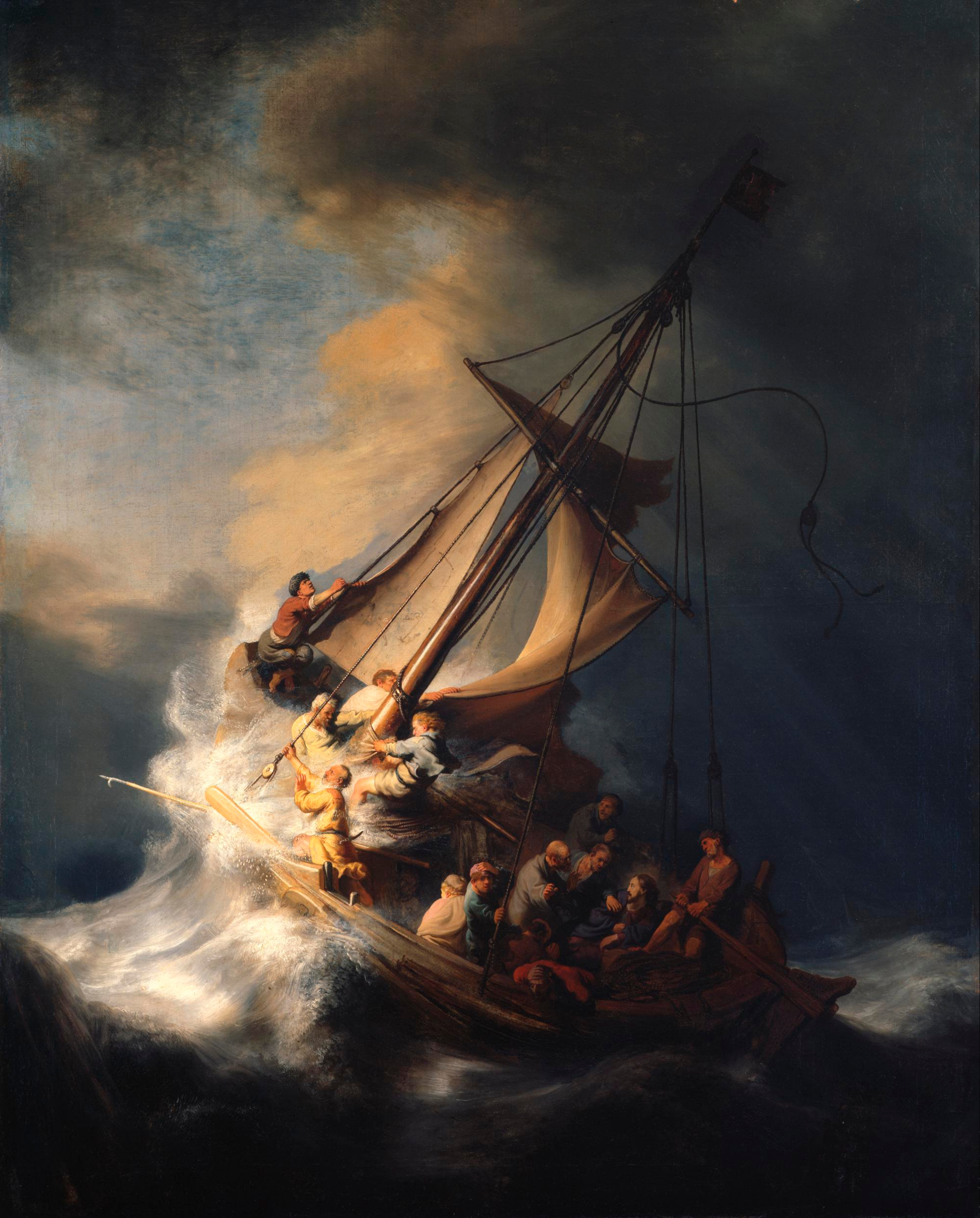
The Storm on the Sea of Galilee, Rembrandt, 1632
Week Seven, Day Two, The Gospel according to Mark, Chapter Four

Fear is a destructive force. It causes people to act in ways they wouldn't normally act. It turns rational, sophisticated people into animals--initiating the fight or flight instinct dormant in our 21st Century brains. In Scripture fear is often referred to in negative terms because fear is the absence of love and hope. 

Who is this then?

In Mark Four we see the disciples and Jesus continuing their ministry near the Sea of Galilee. We then see them get in a boat and take off towards the far shore during the night. Jesus, likely exhausted from long days of ministry and teaching, is asleep on the boat when a storm begins shaking the frame of the boat all around the disciples, terrifying them. 

Who is this then?

When the disciples wake Jesus, they ask Him if He cares if they all die. He woke up and simply commanded the waves to be quiet, and they were. This showed His superiority over nature, but also how little He was worried. He wasn't overcome with fear, and He wasn't shaking with anxiety. There were times in Jesus' life where He became overcome with stress and worry, but over things He knew to be within God's plan. In this moment, against what would be a terrifying storm to anyone on a tiny boat in the middle of a sea, He was calm and confident. 

Who is this then?
Jesus' response to the disciples pierces to my insecurity. He asked them "Why are you afraid? Do you still have no faith?" Fear is our reaction to things we don't understand, or can't control. By it's nature, it is the opposite of faith. Fear leads us to hate others, faith leads us to love them. Fear leads us to superstition, faith leads us to communion. Fear leads us to see Jesus in our presence and ask Him why He isn't doing enough for us. Faith leads us to see Jesus acting even when we can't see Him in our presence. Fear comes from the natural world, from our animal brains, from our desperate need to survive. Faith comes from our Christ-brains, from God, from our identity as commingling participants in the divine reality.

I assume Jesus went back to sleep after asking them these questions. The ultimate picture of Divine serenity and contentment. The disciples were now more freaked out than before. They began asking themselves what would become the single most important question in the history of the world.  

Who is this then?

Answer that question for yourself. Who is He? Does He lead you from your fears and into faith?

Monday, March 7, 2016

Daily Devotional: March 7


Week Seven, Day One, The Gospel according to Mark, Chapter Three

In Mark three, Jesus is continuing His ministry at a furious pace. Not pausing for the Sabbath has made some of the religious elite upset, but not as upset as Jesus' justification for it which pointed at their hypocrisy. The religious elite, certain of their righteousness, accused Jesus of performing miracles using the power of Satan. 

Then He will plunder his house

How many times does our spiritual arrogance cause us to judge a different interpretation or stream of faith to be bankrupt or lacking or even evil? Certainty is the enemy of spiritual growth. You can't grow in faith if you are content with your faith, or if you think you have it figured out. 

In Mark three we see the groundwork for one of the earliest theological thoughts of what came to be known as Christianity. Jesus makes a remark while defending Himself from the accusations of the Pharisees, saying He isn't working under the power of the devil, and that "no one can enter the strong man's house and plunder his property unless he first binds the strong man, and then he will plunder his house."

This remark came to be the bedrock of something called "Christus Victor" theology which many believe to be the earliest doctrine of atonement of the early Church. Christ's Incarnation, death, and resurrection was the binding of the strong man. This was God method of gaining victory over the forces that held humanity enslaved to death. Instead of a view of a God who is angry and thirsty for blood to satisfy His rage, we see a God who is desperate enough for people who He loves to risk death to rescue them. 

Then He will plunder his house

Jesus didn't come to heal a few sick people, He came to end sickness. He came to conquer death, so we don't have to experience it anymore. Jesus didn't sneak out of heaven to try to get us to repent so God would stop being angry with us. Jesus is what God is saying to us. He loves us, and has rescued us. 

Any act that brings more happiness, joy, health, or love to the world is an act of plundering the strong man's house. In this view, the forces of the world have already been defeated, and Christ is already victorious over them. We are now to continue His robbery of Satan by spreading love, joy, peace, patience, kindness, goodness, faithfulness, gentleness, and self-control in this world. 

Then He will plunder his house

Don't wait for a future victory. It has already happened. Be urgent in your actions today, bringing about forgiveness and mercy, love and hope, peace and kindness everywhere, to everyone, all the time. 

Friday, March 4, 2016

Daily Devotional: March 4


Week 6, Day 5, The Gospel According to Mark, Chapter 2

Mark takes some time with this story at the beginning of Chapter two. This story is one of my favorites in the Gospels and I remember the old flannel-graphs in Sunday school growing up, teaching me lessons of friendship. 

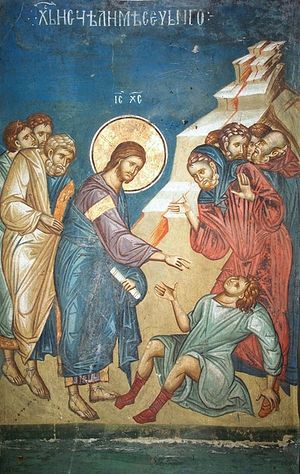
Sin is a sickness. It doesn't just cause sickness, but it is a disease that infects all of us with death. Jesus' has come to defeat death, and to heal the sickness of sin from the world. In this story, we see this theology played out in flesh and blood. A man has a physical ailment--in this case something that has led to paralysis--as well as the spiritual ailment of sin. Jesus, in a effort to show not only are sins and physical ailments not related, but also He is on earth to cure both. 

Pick up your pallet and go home

This story has amazing characters. The friends of a sick man wanted their friend healed so badly they were willing to dig a hole in the roof of a house in order to get their friend an audience with Jesus. These friends were heroes. They recognized a problem and a solution. Our problems have a solution, and we need to simply find ourselves in front of it. We need to be receptive to the forgiveness offered--the unconditional Love that requires nothing of us. We need to feel the healing, and then we need to pick up our pallet and go home.

In chapter two, we also read the story of Levi following Jesus. In Mark's typical fashion, we don't get much drama in this story, just the facts. Levi was a tax-collector. He would have been hated by his countrymen and by his neighbors. He worked for the occupiers, and not the occupied. He was a 'sinner' to the religious elite--someone to be ostracized. 

Pick up your pallet and go home

We see the sickness of sin mentioned again when the religious leaders criticize Jesus for associating Himself with Levi. Jesus calmly responds to them "It is not those who are healthy who need a physician, but those who are sick; I did not come to call the righteous, but sinners." The sickness of sin, and it's elimination, was the purpose of Christ's incarnation. He came to call us, and to heal us, and to send us back into the world to find others. 

Jesus wants to hang out with you. He wants to be around you, and to heal your sickness. But He also wants you to go home and find others who need to hang out with Jesus. He wants you to be the man on the mat, and also the guys digging the hole in the roof. He wants you to be the tax-collector Levi, and also the man Matthew (same guy!) who wrote the book of Matthew. 

We have to be able to experience the healing of Jesus, and also be able to show it to others. 


Thursday, March 3, 2016

Daily Devotional: March 3

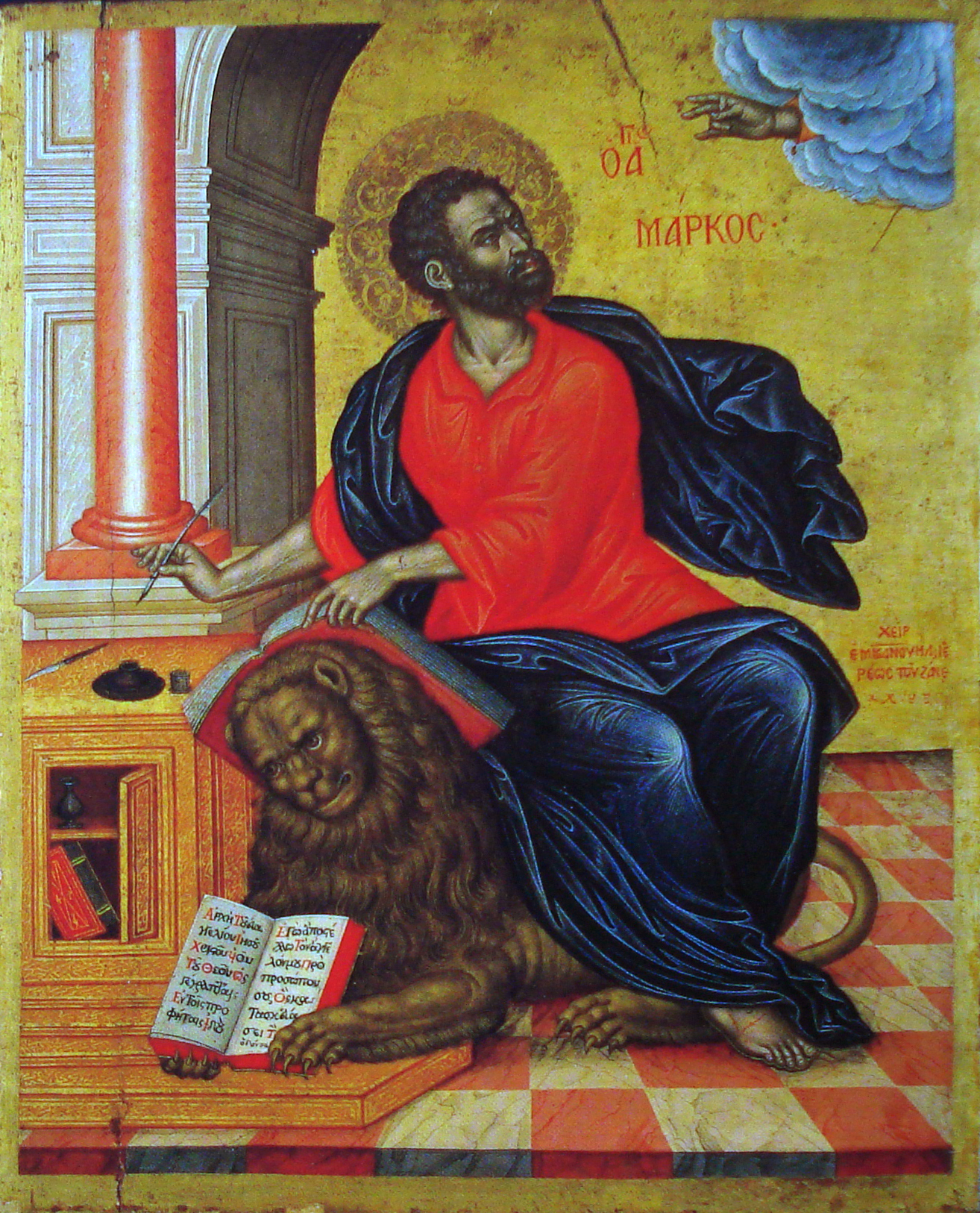
Icon of St. Mark the Evangelist, 1657
Week 6, Day 4, The Gospel According to Mark, Chapter 1

We have finished with Matthew's account of the life and teachings of Jesus and are now starting on the book traditionally attributed to Mark. This book is the oldest of the Gospel accounts, and the shortest. You can feel the bare-bones nature of the writing as you read it, as if Mark was rushing to get this on paper. The events of Jesus' life were still fresh in the mind of the author. He was writing this during the 60's AD, probably in Rome, and was writing to a mostly non-Jewish audience. These were tumultuous times for the early church, as Nero was persecuting and murdering hundreds of believers a year. 

What Mark 1 shows us is the urgency of Christ. He only ministered for around three years, and had a lot to accomplish in that time. From the moment Mark begins, Jesus is hitting the ground running. It reads like someone out of breath telling you about the best concert they've ever seen. 

Immediately

The translation I usually read is the NASB, and in its account of Mark 1 alone, the word "immediately" is used 10 times. Often we think of "God's timing," as slow, methodical, or just not as fast as we want it to be. We have problems, we need solutions. We want God to act instantly. We want suffering to end swiftly.

Immediately

The Greek phrase that has been translated into "and immediately" is kai euthus and it is repeated over and over again throughout the Gospel of Mark. Remember this book was written while Christians were having their homes and bodies burned by Nero and the Jews were revolting against the Romans--these were urgent times. This phrase, its repetition, and the stripped down, just-the-facts nature of Mark reflects when it was written. People needed to hear this story. In a world that seemed to be on fire, people needed to hear about a God that had changed the world.

Immediately

The world is still on fire, it seems. Things seem to be spinning out of control, and everyone is terrified of everyone else. We like to think of ourselves as progressive and advanced, but we are still scared, violent humans just like they were in the first century. We still need the urgent action of Love that was unleashed on the world in the first century. We are too easily pulled backwards into regressive actions of violence or hatred or legalism when the truth is all of those actions were rendered obsolete. When we realize we don't have to live in fear or hate or legalistic restriction any longer, our lives change.

Immediately

Wednesday, March 2, 2016

Daily Devotional: March 2


Week 6, Day 3, The Gospel According to Matthew, Chapter 28

If your best friend had just been murdered by the state and every leader you are supposed to respect, if the one teacher you had ever felt taught like He knew something worth knowing had just been tortured to death, if the person who brought you life like never before had just been brutally killed—would you risk going to his grave? In today’s passage, we see two brave women risk being persecuted in order to respect their dead friend.

Jesus, the giver and bringer of Life couldn’t stay dead. Because love does nothing but create life, the Christ would have to come back from the dead. God is a singularity of self-giving and creating love at the center of all things. Christ is this essence of God working in the world. Jesus, being the manifestation of this essence, was the “first-born from among the dead,” as St. Paul would later say.

I am with you. Always.

Love is the central fact of the universe. It is the energy that keeps atoms arranged and planets spinning. The universe is expanding into an existence less infinite than the love on which it floats. Any war or hatred or persecution or bullying or prejudice that exists is the last-ditch effort of a world-view that has lost so completely it couldn't even keep one man dead. Love will always win, because love is in control.

When Jesus meets His disciples, some are immediately overcome with joy and worship Him. The interesting thing in Matthew is the inclusion of the phrase “but some doubted.” What would it take for those people to believe?

I am with you. Always.


Sometimes we doubt. Sometimes, even though I have had experiences with the love at the center of the universe, I still doubt it. I can be covered in love, wrapped in it, and feeling nothing but God’s presence, and then ten minutes later forget the whole experience. That is part of faith. We are all insecure because the world around us tells us we have to do or be or buy differently in order to be better than we are. Some religious leaders will try to tell us that we have to do or give or pray more in order to feel God’s presence.

I am with you. Always.

In the silence, He is there. In grief, He is there. In doubt, He is there. In pain, He is there. In the times we win, He is there. He is there because He is holding the universe together and also deeply in love with me.

Tuesday, March 1, 2016

Daily Devotional: March 1


Week 6, Day 2, The Gospel According to Matthew, Chapter 27

During Lent it is very easy to wait until the week before Easter to focus on the Passion Story. I am thankful for this meditation series and for great pastors whose podcasts inspire me. I borrow pretty heavily from guys like Brian Zahnd, and I want to point you guys to him as well because I know he can influence you too. 

Today we are reading what must have been a tough passage for Matthew to write. We have reason to believe he watched these events unfold first-hand. Even though he knows the end of the story as he is writing it, he must have found it hard to think about his best friend and Lord being beaten and rejected and murdered.

Give us Barabbas 

The last chance for Jesus was this moment where Pilate offers the crowd the release of one prisoner. He thinks they will surely pick Jesus of Nazareth, because this man was a hero. Another man, Jesus Barabbas, who ironically shared a first name with Jesus Christ, was in prison. He was a different kind of hero. He was in prison for basically inciting a riot. Historians believe he was a revolutionary, the type of man who believed in armed conflict against the Romans. He was a political prisoner of the Roman state. 

One man offered peace at all costs, one man believed in a quick-strike revolution. One man stood for a revolution of mercy and forgiveness, the other for a political revolution. We see who the crowd chose. We often think of them as being under the influence of mob mentality, or of some sinful spirit and that's why they would choose Jesus Barabbas over Jesus of Nazareth, but that doesn't have to be the case.

Give us Barabbas

We shout the same thing when we choose the easy way out, the way of destruction. We shout the same thing when we look to our finances or guns to save us. We shout the same thing when we want to protect our necks at the cost of some other people group, religion, or race to be wiped off the face of the earth. We shout the same thing when we want to build walls and not bridges.

Give us Barabbas

We want it our way! We don't want the peaceful hero, we want the guy with the biggest gun! Give us the biggest bombs! Give us the kingdom we want, or else!

Don't choose Barabbas. Choose the other Jesus, the one who offers love and mercy.